Hip osteoarthritis, the most common form of hip arthritis, is a condition that many people develop as they age. Osteoarthritis of the hip develops as a result of the degenerative wear and tear changes in the hip joint as we age and cause a lot of pain and stiffness. It can also make it challenging to bend over to tie a shoe, rise from a chair, or take a short walk. Although there is no cure for osteoarthritis, there are many treatment options to help you manage pain and maximize functional capacity.
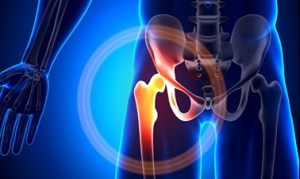
Similar to the shoulder joint, the hip is a ball-and-socket joint, allowing for a wide range of motion. The socket is formed by the acetabulum, which is part of the large pelvis bone and the ball is the femoral head, which is the upper end of the thigh bone (femur). The surface of the bones in this joint are covered by articular cartilage, a smooth, slippery substance that protects and cushions the bones and enables them to move easily.
Hip osteoarthritis occurs most often in people 50 years of age and older. This form of arthritis is characterized by the cartilage in the hip joint gradually wearing away over time, leading to a bone rubbing on bone hip joint.
The Most Common Causes of Hip Arthritis
- Family history of osteoarthritis
- Previous hip injury
- Obesity
- Hip dysplasia
- Increasing age
The Most Common Signs & Symptoms of Hip Arthritis
- Hip pain and stiffness especially in the morning or after sitting for prolonged periods
- Pain in your groin or thigh that radiates to your buttocks or your knee
- Worsening pain with vigorous activity
- Hip joint stiffness that causes difficulty walking or bending over
- Locking or grinding noise (crepitus) during movement caused
- Decreased hip mobility affecting the ability to walk and may cause a limp
(Source: OrthoInfo)
What Are the Treatments for Hip Arthritis?
Marcel Jacobs PT provides a hands-on physical therapy approach which means you’re going to get fast access to immediate care in order to soothe and relax those tight and aching muscles, mobilize and loosen those restricted and painful joints, and strengthen your body so that you can go back to doing the things that you love. Your therapist will perform a thorough physical examination and evaluation in order to provide you with a deeper understanding of your impairments, compensations, and dysfunctions. You may find yourself having your concerns eased, questions answered, and physical pain reduced inside of 45 minutes with your physical therapist.