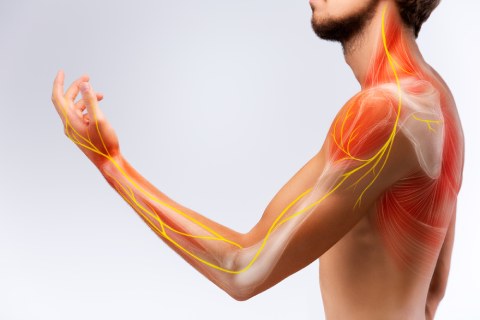
Cervical radiculopathy, or a “pinched nerve”, usually occurs when one of the spinal nerves exiting the spinal cord in the neck gets irritated or compressed. This can cause muscle weakness and pain that radiates into the shoulder, shoulder blade, and or arm/forearm regions. Cervical radiculopathy can be either chronic or acute. Acute cervical radiculopathy usually occurs in younger people due to sudden injury resulting in disc herniation. In some cases, acute cervical radiculopathy symptoms are not associated with a traumatic episode. Chronic cervical radiculopathy is often related to the normal aging and degenerative process that causes “wear and tear” changes in the spine, such as arthritis.
The Most Common Signs & Symptoms of Cervical Radiculopathy
- Tingling and “pins and needles” in the fingers or hand
- Muscle weakness in the muscles of the arm, shoulder, or hand
- Impaired sensation
As the discs in the spine age, they lose water content and height and may begin to bulge. As the discs lose height and stiffen, the vertebrae move closer together. This can lead to the formation of bone spurs, further increasing stiffness in the spine. Eventually, this leads to the narrowing of the small openings on each side of the spinal column where the nerve roots exit and causes pinching of the nerve root – leading to chronic cervical radiculopathy.
A herniated disc occurs when the inner jelly-like substance (nucleus pulposus) pushes out against the outer portion (annulus fibrosus). When the herniated disc bulges out toward the spinal canal, it puts pressure on the spinal nerve root, leading to cervical radiculopathy, causing pain and weakness in the area that the nerve supplies.
(Source: OrthoInfo)
What Are the Treatments for Cervical Radiculopathy?
Marcel Jacobs PT provides a hands-on physical therapy approach which means you’re going to get fast access to immediate care in order to soothe and relax those tight and aching muscles, mobilize and loosen those restricted and painful joints, and strengthen your body so that you can go back to doing the things that you love. Your therapist will perform a thorough physical examination and evaluation in order to provide you with a deeper understanding of your impairments, compensations, and dysfunctions. You may find yourself having your concerns eased, questions answered, and physical pain reduced inside of 45 minutes with your physical therapist.