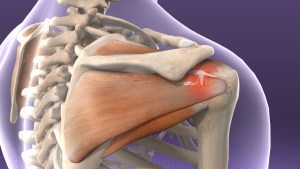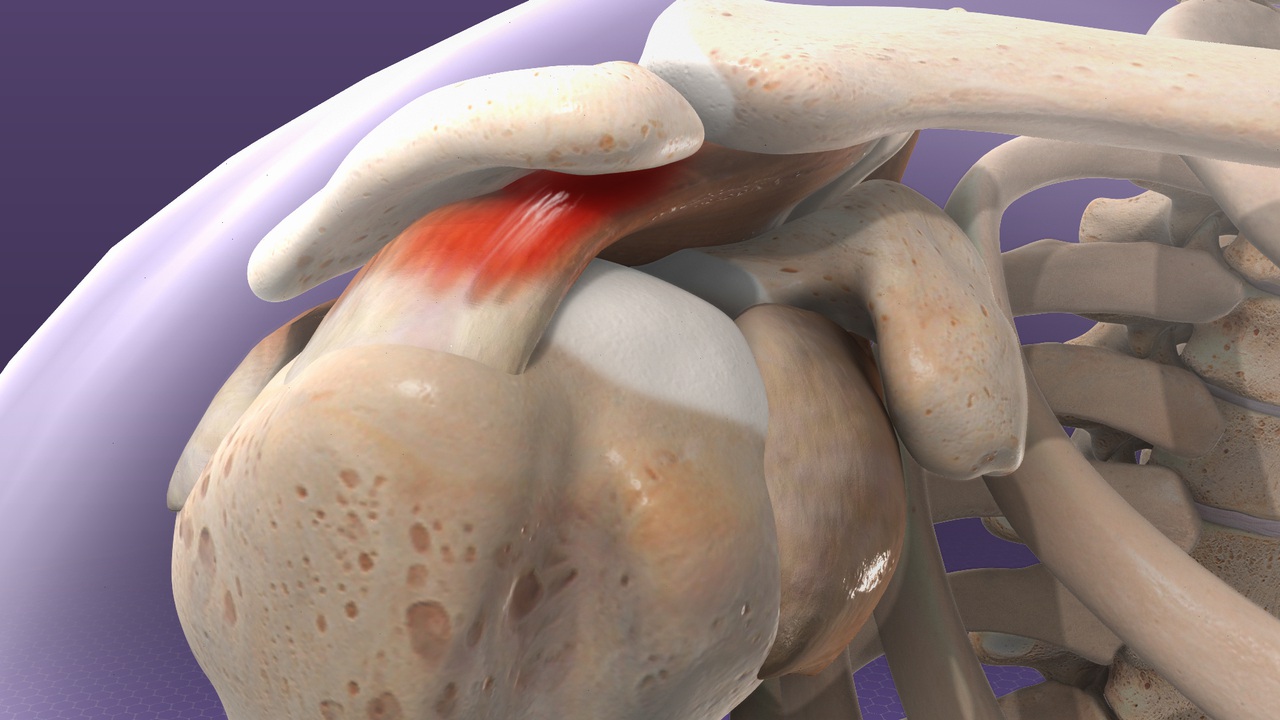
Shoulder impingement syndrome is characterized by a vicious cycle of rubbing of the rotator cuff in the space between your upper arm bone (humerus) and the top outer edge of your shoulder (acromion). This can lead to swelling and further narrowing of the space, resulting in pain and irritation. The rotator cuff muscles help stabilize the shoulder joint and raise your arm overhead. The structural anatomy of the rotator cuff muscles predisposes the rotator cuff musculature to pinching between the humerus and acromion, leading to impingement syndrome.
Rotator cuff injury or irritation can cause swelling in the surrounding tissue and can reduce the amount of space between the humeral head and acromion. Like a vicious cycle, the rubbing of the rotator cuff tendons result in swelling, further narrowing the affected space. Shoulder impingement syndrome is most commonly seen in individuals involved in sports and other activities requiring overhead activity such as in swimming, baseball, volleyball and tennis. Shoulder impingement can also result from an injury, such as a fall onto an outstretched arm or directly onto the shoulder. Shoulder impingement syndrome is thought to be the cause of 44% to 65% of all shoulder pain complaints.
The Most Common Causes of Shoulder Impingement Syndrome
- Swollen or torn rotator cuff tendon. This can be due to shoulder injury, overuse from repetitive activity of the shoulder or from age-related degenerative wear and tear.
- Shoulder Bursitis. The bursa is fluid-filled sac between your tendons, helping your muscles and tendons glide over your bones without friction. Your bursa can become irritated and inflamed due to shoulder injury, or overuse of the shoulder.
- Structural defects of the acromion or development of age-related bone spurs on your acromion.
- Bicipital Tendinitis
- Rotator Cuff Tendinitis
The Most Common Signs & Symptoms of Shoulder Impingement Syndrome
- Pain with overhead shoulder position
- Pain when raising your arm, lowering your arm from a raised position or when reaching
- Pain and tenderness in the front of your shoulder
- Pain that moves from the front of your shoulder to the side of your arm
- Pain when lying on the affected side
- Difficulty sleeping due to pain
- Pain when reaching behind your back
- Shoulder and/or arm weakness and stiffness
(Source: Cleveland Clinic)
What Are the Treatments for Shoulder Impingement Syndrome?
Marcel Jacobs PT provides a hands-on physical therapy approach which means you’re going to get fast access to immediate care in order to soothe and relax those tight and aching muscles, mobilize and loosen those restricted and painful joints, and strengthen your body so that you can go back to doing the things that you love. Your therapist will perform a thorough physical examination and evaluation in order to provide you with a deeper understanding of your impairments, compensations, and dysfunctions. You may find yourself having your concerns eased, questions answered, and physical pain reduced inside of 45 minutes with your physical therapist.