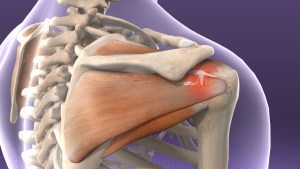
The rotator cuff, an important part of your shoulder, refers to a group of muscles and tendons that hold your shoulder in place. Your rotator cuff allows you to raise your arms and perform overhead activity without your arm falling off. Rotator cuff tears are a common cause of pain and disability among adults. Risk of injury to the rotator cuff increases with age, and may occur earlier in people participating in repetitive overhead activity in the workplace, or during athletic activities. Injury to the rotator cuff, such as a tear, may also happen suddenly when falling on an outstretched hand. Without sufficient treatment or diagnosis, a rotator cuff injury may cause permanent loss of motion or weakness in the shoulder joint, and lead to conditions such as rotator cuff tendinitis or tendinosis.
The Most Common Signs & Symptoms of Rotator Cuff Injury
- Recurrent shoulder pain, especially with certain activities
- Difficulty sleeping due to shoulder pain
- Grating or crackling sounds when moving your arm
- Decreased shoulder mobility
- Shoulder muscle weakness
(Sources: Mayo Clinic and Johns Hopkins Medicine)
What Are the Treatments for Rotator Cuff Injury?
Treatments vary, depending on the severity of the tear. Surgery is usually the last resort, and only necessary if the tear remains untreated and gets worse or does not improve. Your health care provider may request imaging to rule out other possible injuries and conditions while determining the severity of the tear. Your shoulder will certainly require safe and effective strengthening and mobilization to optimize function, while weighing surgical options as necessary.
Marcel Jacobs PT provides a hands-on physical therapy approach which means you’re going to get fast access to immediate care in order to soothe and relax those tight and aching muscles, mobilize and loosen those restricted and painful joints, and strengthen your body so that you can go back to doing the things that you love. Your therapist will perform a thorough physical examination and evaluation in order to provide you with a deeper understanding of your impairments, compensations, and dysfunctions. You may find yourself having your concerns eased, questions answered, and physical pain reduced inside of 45 minutes with your physical therapist.