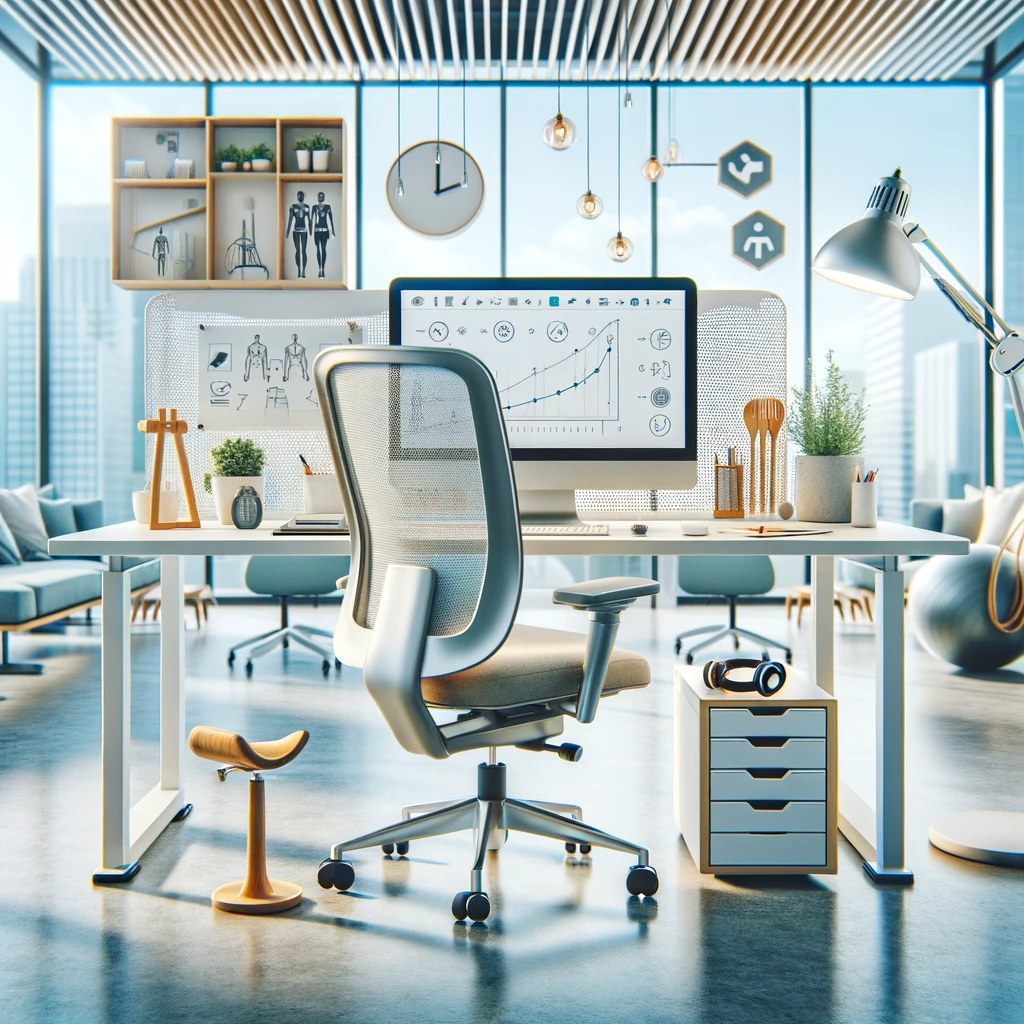

Musculoskeletal disorders are common results of poor ergonomics, ranging from the very common carpal tunnel syndrome to more severe conditions like arthritis and chronic lower back pain.
As a physical therapist, I’ve seen the impact of office ergonomics on health firsthand. This post aims to guide you through the essentials of ergonomic setups, adjustments to your posture, the value of regular breaks, and strategies to create a work environment that supports your body’s health.
Understanding Ergonomics
Ergonomics is more than just a buzzword; it’s designing the workplace to fit the worker. This encompasses everything from a room’s lighting to a table’s height. It’s about ensuring that tasks, equipment, and the environment are aligned with the human body’s capabilities, promoting safety, efficiency, and comfort.
One study found that among office workers, those who reported working in non-ergonomic conditions had a 2-fold increase in the risk of developing musculoskeletal disorders compared to those with ergonomic workstations. Understanding and implementing basic ergonomic principles can be a game-changer for physical well-being.
Inappropriate workstation setups or body postures, repetitive movements, or excessive force are direct contributors to MSDs. Neck and back pain, carpal tunnel syndrome, and tendonitis are just a few of the conditions that can manifest due to poor ergonomics. The aftermath includes decreased productivity, increased absenteeism, and inevitable healthcare utilization.
Setting Up Your Workstation
The cornerstone of a healthy workspace is an ergonomic workstation. Your desk and chair play pivotal roles in your comfort and productivity.
Your Desk and Chair
An adjustable chair that can support the natural curve of your lower back is a crucial investment. Combined with a desk at the appropriate height, your chair forms the core of your working posture.
Get into a position where your feet can touch the floor directly. Your knees should be level with your hips or slightly below hip level, and your spine should maintain its natural S-shaped curve.
Peripheral Posture
Everything from the height of your computer monitor to the positioning of your keyboard and mouse impacts your body’s alignment.
- Your monitor should be at eye level and about an arm’s length away, with the top third of the screen at or below eye level to minimize strain on your neck.
- Arrange your desk and computer hardware to reach all the buttons and monitors while maintaining a neutral spine angle, straight wrists, and relaxed upper arms.
Accessory Advantage
Ergonomic accessories such as footrests, adjustable keyboard trays, and document holders can further fortify your workstation. These elements may seem minor but can make a major difference in your long-term comfort.
Correcting Posture and Body Mechanics
Sitting is hard on your back; there are no bones about it, especially when it’s in the wrong position. But with a few adjustments, you can slouch-proof your approach to office life.
The Perfect Posture
Maintaining the correct posture is about more than just sitting up straight. It’s a comprehensive stance that involves your head, shoulders, back, and legs.
- Bring your shoulders down to meet your hips and your ears to the side. Keep your head level, not tilted or turned.
- Put your arms and elbows on the edge of your desk or chair. Use a chair with armrests to support your arms or, better yet, your forearms.
- Your feet should be flat on the floor or a footrest, with your knees at or below hip level.
Lifting and Carrying the Right Way
Human bodies are designed to push more effectively than they pull. When lifting something from the ground, bend at your knees, not your waist.
Use your leg muscles as you push your body back up. Hold the object close to your body, and keep your back straight. Lifting properly can protect you from numerous back problems. When carrying, balance the load on each side of your body and keep your back straight.
Stretching the Boundaries
Add stretching exercises into your daily routine can alleviate muscle tension and improve flexibility.
Initiate a sequence of stretching exercises focusing on your neck, shoulders, back, and legs. Here are a few to get you started:
- Neck stretches are done by gently pulling your head to one side, holding it for several seconds, and then repeating it on the other side.
- Shoulder rolls and shrugs loosen tension.
- Maintain a sitting position while placing your heel on the floor and extending one leg. To gently stretch your back thigh, bend forward just a little.
Taking Regular Breaks
Prolonged sitting is detrimental to human health. When you sit, your back, shoulders, and neck are subjected to an increased load, leading to discomfort and pain. If you’re going to sit for two hours straight, try to break up the work into five-minute intervals. During these breaks, perform simple movements and stretches to counteract the effects of prolonged sitting.
The 20-8 Philosophy
For every 20 minutes of work, take an 8-second break to stand, stretch, or change your position. This small interval prevents the onset of static load while promoting circulation and mental focus.
Quick Ergonomic Exercises
Don’t think you have time for a break? Think again. Incorporate these exercises into your work routine, and your body will thank you.
- Seated leg extensions can be performed by straightening one or both legs out and holding them in a fixed position for several seconds.
- The seated torso twist is executed by sitting tall in your chair with both feet flat on the ground. Exhale as you twist to the right, using your left hand on the right knee to help you deepen the stretch. Hold for 10-15 seconds, then return to center.
- The shoulder blade squeeze is simple. Maintain a straight back, relaxed shoulders, and palms pointing front whether you sit or stand. Put a little pressure on your shoulder blades.
Elevate Your Workday Wellness with Marcel Jacobs PT in Midtown Manhattan
Transform your workspace into a beacon of health and productivity with the expert guidance of Marcel Jacobs PT. Located in the vibrant heart of Manhattan, we are dedicated to providing custom ergonomic solutions tailored to your individual needs. Our approach ensures that your office setup not only promotes efficiency but also supports your physical well-being. From personalized ergonomic assessments to tailored advice on posture correction and workstation setup, our comprehensive services are designed to align perfectly with your work habits and health goals.
Why Partner with Marcel Jacobs PT for Your Ergonomic Needs?
- Tailored Ergonomic Assessments: Our dedicated team conducts in-depth evaluations to understand your unique workspace dynamics. We provide solutions that fit seamlessly into your daily routine, enhancing both comfort and productivity.
- Holistic Support: At Marcel Jacobs PT, we go beyond basic ergonomics. We offer insights into posture improvements, effective break strategies, and the integration of movement into your workday to foster overall health and prevent discomfort.
- Cutting-Edge Expertise: Staying abreast of the latest ergonomic research and physical therapy practices, we bring you innovative strategies to enhance your office environment. Our expertise ensures that your workspace is not just a place of work but a sanctuary for health.
Don’t let your workspace compromise your health. Marcel Jacobs PT in Midtown Manhattan is your ideal partner in creating an ergonomic office setup that supports both your productivity and physical well-being. Reach out for a consultation today and discover how we can transform your work environment. Step into a work life redefined by comfort, well-being, and efficiency, right here in the heart of Manhattan. Visit our clinic to learn how we can make your workspace work for you, fostering a healthier, more vibrant work life.