Just as workout sessions are crucial for your well-being, breathing during those exercises is also crucial. Health experts agree that breathing exercises, whether simple or a series of well-contrived respiratory exercises, have many benefits.
Yet, when it comes to anything crucial, we overlook it and take it for granted to the point where we don’t realize we could have been doing it incorrectly the whole time. Most of us don’t really know that there is a proper way of doing it.
Inhaled oxygen significantly impacts a variety of physiological processes, including improving performance during exercise and increasing stamina. Proper breathing has been shown to increase endurance and scientifically increase the body’s capacity to burn fat.
Breathing and the Nervous System
The musculoskeletal and nervous systems work in tandem to enable movement. If a problem occurs in one system, it may show up as an issue in another. That means a problem in the nervous system could be exhibited as breathing difficulty in the musculoskeletal system.
The main brain and spinal cord share control with the peripheral nervous system, which includes the somatic and autonomic nervous systems. The autonomic part comprises the sympathetic, parasympathetic, and enteric nervous systems.
Anytime we experience feelings such as fear, pain, and stress, the sympathetic and parasympathetic nervous systems kick in. They alter our blood pressure and heart rate. Generally, the parasympathetic system might be associated with a relaxation response, while the sympathetic system is more associated with a heightened response or stress.
If one tries to slow their breathing by breathing for a long time, increasing activity in the parasympathetic system, it would mean that the individual relaxes. If one were to do chest fast breathing and take a long time to breathe, it would increase the activities of the sympathetic system, which is a response to stress.
An increase in a state or mode is achieved by up-regulation; this occurs naturally when the sympathetic nervous system becomes the dominant one in our bodies. This, therefore, tends to interfere with the normal pace of our breathing through the process of up-regulation. It reaches that point of changing the muscles responsible for breathing.
Thus, control over our body’s movements can change, and it is possible to experience muscular pain.
Role of Physical Therapy in Breathing Rehabilitation
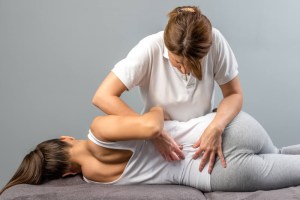
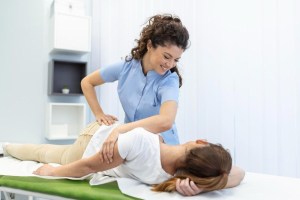
Physical therapy helps in the process of a person developing correct and efficient respiratory patterns. Over time, it will aid in improving the person’s physical performance, decreasing pain and discomfort, and maintaining general well-being.
The therapist will recommend several ways for a person to practice healthy breathing habits, including several exercises for deep diaphragmatic breathing and exercises that include an expanded rib cage, as well as education in postural training and relaxation techniques.
These techniques affect the respiratory muscles and further improve the function of other muscles involved in respiration. This retrains the breathing-muscle-involved muscles and gives the person better control of respiration. So, physiotherapy focuses on teaching the patient proper breathing techniques.
Benefits of Physical Therapy in Breathing Rehabilitation
Proper breathing techniques coupled with physical therapy and rehabilitation can have the following benefits:
Helps a Deep Breath
First and foremost, pulmonary rehabilitation would improve breathing capacity. Although an individual may not find that a rehab course brings back his or her lung functionality state to normal, ways of managing the symptoms that arise can be learned.
You can increase your oxygen supply and ease your discomfort with the right medicines and breathing exercises. Most patients who participate in pulmonary rehab programs and follow the course see excellent reductions in their wheezing. They will have much less trouble catching their breath. Thanks to rehab, it is almost as if they were breathing a sigh of relief.
Improves Oxygen Intake and Distribution in the Body
Physiotherapy and rehabilitation tactics promote strong respiratory muscles and better functioning, which will result in good oxygen intake and distribution in the body. The body’s oxygen is needed sufficiently for cellular functions, and enhanced circulation literally ensures that all organs get enough oxygen to function.
If someone has a respiratory condition, they are likely to suffer from breath shortness or overall body tiredness because of inadequate oxygenation. Physical therapy can better target these to help improve the general status of oxygen in the body.
Enhances Your Mental Well-being
According to the American Lung Association, one who suffers from chronic disease of the lung also experiences mental illness, such as anxiety and depression. But there’s a silver lining. One possible approach to alleviating some of the emotional burden is pulmonary rehabilitation, which focuses on improving breathing skills.
Most of these programs also provide a kind of safety net. They offer mental health counseling services to patients only if and when they desire. So, if you are feeling overwhelmed, do know that one is not alone; the safety net is right there to catch one before he falls.
By associating with a pulmonary rehab program, you will also get the motivation and support that you need to take the initiative to manage your mental health and respiratory well-being.
Build Endurance
The key to any rehab program is exercise. To get the best functioning out of your heart and lungs, include strength training with some light cardio. The program will guide you in working out and teaching you how to adjust exercises so that they are easy and comfortable for you to perform.
This will make exercising comfortable and assist one in setting up a routine. This routine will be followed even after the program has been completed. Following this routine will help improve your stamina, making daily activities easier to manage.
Therefore, better breathing techniques and strong respiratory muscles further contribute to endurance. Control over your breath and the ability to use it properly will keep you involved in the activity much longer than usual, not giving up from tiredness.
What Breathing Techniques Physical Therapists Use?
Have you ever been so stressed out that your heart races like you’ve just run a marathon that you suddenly feel like it’s all a bit much? What are you always told to do first by friends or family members? “Just breathe!” Yes!
In fact, breathing exercises are more than just a stress-buster. Physical therapists often use them to help patients improve their physical health.
Diaphragmatic Breathing
The first of these health-improving methods is diaphragmatic breathing, or “belly breathing.” This method calls for taking a really deep breath—downwards to your lungs. As you breathe in, the air should inflate not only your chest but also your belly. The other way is when you exhale. It is perfect for people suffering from shortness of breath or chronic lung conditions!
Pursed Lip Breathing
This is a simple breathing exercise called pursed lip breathing. In this exercise, you slowly breathe in through your nose, then very gently and evenly blow the air out through your pursed lips, as though blowing on hot soup.
This method helps make your exhalations longer and gets rid of stale air in your lungs. This technique can benefit people with chronic obtrusive pulmonary disease (COPD).
The Strength of the 4-7-8 Method
The4-7-8 technique just soundsd like the ultimate hack for relaxatio: take aA really deep breath, 4 seconds in,holdg the air in your chest for 7 seconds, and then slowlyletg that breath out for 8 seconds. It helps to calm the mind, reduce anxiety, and improve sleep.
Box Breathing
This technique, used by Navy SEALs, has become one of those go-to practices for maintaining a state of calm in various situations. Breathe in, hold your breath, breathe out, then pause – all for an equal amount of time, usually 4 seconds. It’s a brilliant tool to reduce stress and improve concentration, and it’s easy enough for anyone to practice.
Breathe Easy with Marcel Jacobs PT: Mastering Breathing Techniques for Better Health
Unlock the full potential of your breath with the expert guidance at Marcel Jacobs PT. Our clinic is dedicated to teaching you effective breathing techniques that enhance your physical therapy and rehabilitation journey. Located in a supportive environment, we’re here to help you harness the power of your breath for improved well-being and performance.
Why Partner with Marcel Jacobs PT for Breathing Rehabilitation:
Expert-Led Training: Learn from the best as our skilled therapists guide you through specialized breathing exercises designed to optimize oxygen intake, improve endurance, and alleviate stress.
Personalized Breathing Programs: We understand that everyone’s respiratory needs are unique. That’s why we offer tailored programs, including diaphragmatic breathing, pursed-lip breathing, and the 4-7-8 method, to match your specific health goals.
Holistic Health Benefits: Beyond enhancing lung function, our breathing techniques aim to boost your mental well-being, offering relief from anxiety and improving your overall quality of life.
Transform your health and elevate your physical therapy experience with the power of controlled breathing at Marcel Jacobs PT. Reach out to us today and take the first step towards mastering the art of effective breathing for a healthier, more vibrant you.
So the next time one is feeling too much stress or overwhelmed, this is a good reminder of the power of breath. With the right techniques and regular practice, they just might breathe into better health.