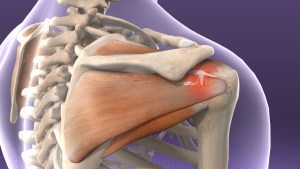
Adhesive capsulitis, or frozen shoulder, is characterized by stiffness and pain in the shoulder. Frozen shoulder typically begins insidiously, and worsens over time and can resolve within 1 to 3 years. There are many potential risk factors that can lead to the development of frozen shoulder. For example, immobilizing the shoulder and keeping it still for a prolonged period can increase the risk of developing frozen shoulder. Typically, immobilizing the shoulder may be due to a particular shoulder injury and/or shoulder surgery.
The shoulder joint is enclosed in a capsular connective tissue. Frozen shoulder involves thickening and adhesion of the capsular tissue which leads to tightening around the shoulder joint. In many instances, it is unclear why some people develop frozen shoulder. However, it is still more likely to occur after a long period of keeping the shoulder still.
The Most Common Signs & Symptoms of Adhesive Capsulitis
Typically, frozen shoulder runs its course through three stages:
- Freezing Stage: This can last from 2 to 9 months. Shoulder movement is very progressively limited and causes pain.
- Frozen Stage: This can last from 4 to 12 months. Shoulder remains very stiff and function is limited, but the pain improves slightly.
- Thawing Stage: This can last from 5 to 24 months. Shoulder mobility, pain, and stiffness progressively improves.
For some individuals, shoulder pain may worsen at night, and may interfere with ability to sleep comfortably. It is recommended to avoid sleeping on the affected shoulder.
Risk Factors For Developing Adhesive Capsulitis
- Women in particular, over the age of 40 are more likely to develop frozen shoulder.
- Shoulder immobilization for prolonged periods, due to injury or surgery, increases the risk for developing frozen shoulder. This can include: rotator cuff injury, broken arm, stroke, recovery from surgery.
- Systemic diseases such as diabetes, overactive thyroid (hyperthyroidism), Underactive thyroid (hypothyroidism), cardiovascular disease, or Parkinson’s disease.
(Source: Mayo Clinic)
What Are the Treatments for Adhesive Capsulitis?
Marcel Jacobs PT provides a hands-on physical therapy approach which means you’re going to get fast access to immediate care in order to soothe and relax those tight and aching muscles, mobilize and loosen those restricted and painful joints, and strengthen your body so that you can go back to doing the things that you love. Your therapist will perform a thorough physical examination and evaluation in order to provide you with a deeper understanding of your impairments, compensations, and dysfunctions. You may find yourself having your concerns eased, questions answered, and physical pain reduced inside of 45 minutes with your physical therapist.